South Korean, Taiwanese Semiconductor Workers Say 'Worker Health as Important as Corporate Growth' - Yonhap Infomax https://naver.me/GsBhtZul
South Korean, Taiwanese Semiconductor Workers Say 'Worker Health as Important as Corporate Growth'
International Joint Declaration at Samsung Electronics Hwaseong Site - 25 Organizations Participate
Call for Chemical Information Disclosure, Stronger Supply Chain Accountability
International Declaration for the Health and Human Rights of Semiconductor Workers[Source: SHARPS]
(Seoul=Yonhap Infomax) Young Sook Yoon - South Korean and Taiwanese workers suffering from occupational diseases in the semiconductor and electronics industries have launched an international joint response, calling for expanded recognition of industrial accidents and disclosure of hazardous chemical information.
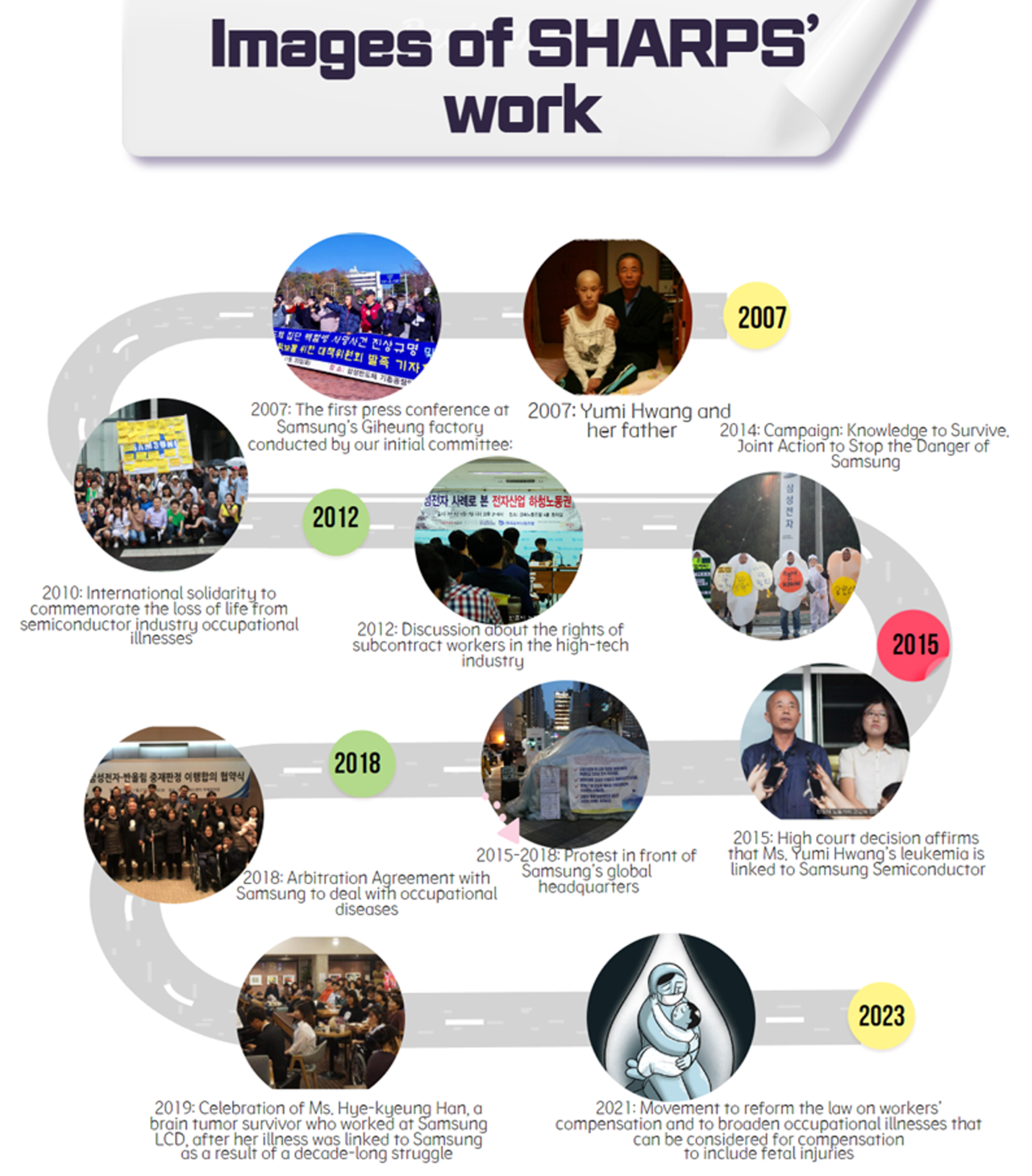
SHARPS (Supporters for the Health and Rights of People in the Semiconductor Industry) and participating organizations from the International Forum (I-SHARPS) held a press conference on the morning of the 30th in front of Samsung Electronics' Hwaseong H3 facility, announcing an "International Declaration for the Health and Human Rights of Semiconductor Workers."
Twenty-five labor, human rights, and environmental organizations from South Korea, Taiwan, and other countries participated in this declaration. They demanded stronger government and corporate accountability, arguing that worker health and safety have not been adequately protected during the semiconductor industry's growth.
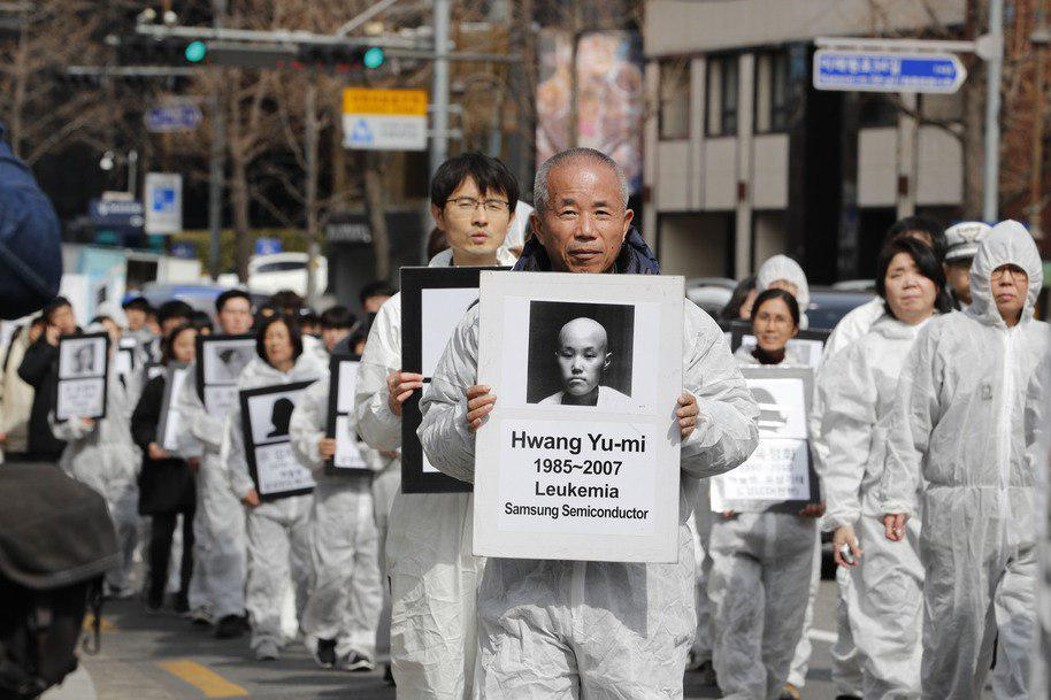
The press conference featured cases of domestic workers who claim to have contracted occupational diseases while working at Samsung Electronics, alongside experiences of workers who suffered occupational diseases at Taiwan's RCA factory.
Lim Da-yoon, a full-time activist at SHARPS, introduced cases of four workers who worked at Samsung Electronics' Giheung and Hwaseong facilities, pointing out that the burden of proving industrial accidents is excessively placed on workers.
Lim shared cases of a worker diagnosed with colon cancer after 19 years at Samsung Electronics' Giheung facility, and workers who died from brain tumors, lung cancer, and leukemia while working at the Hwaseong facility.
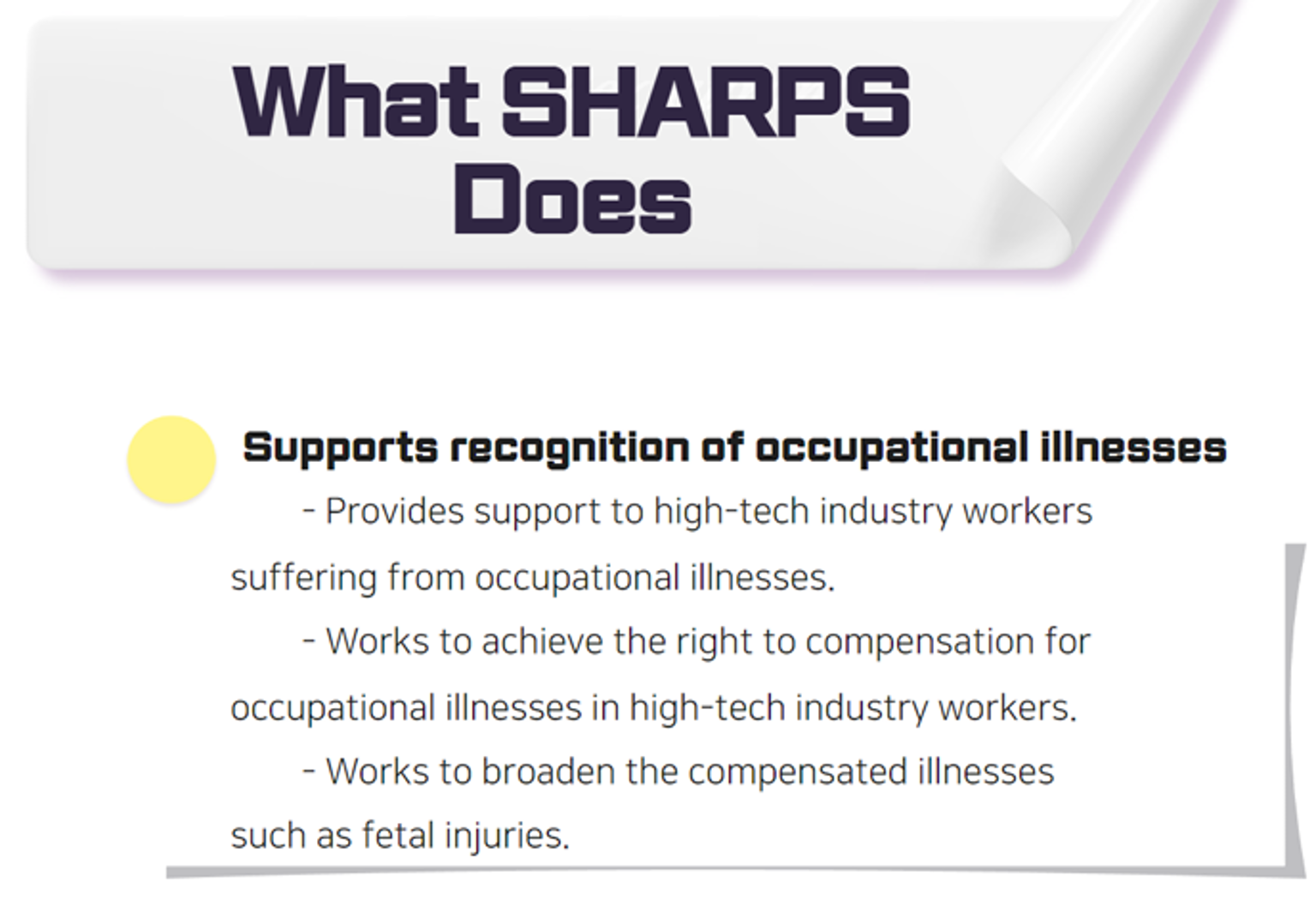
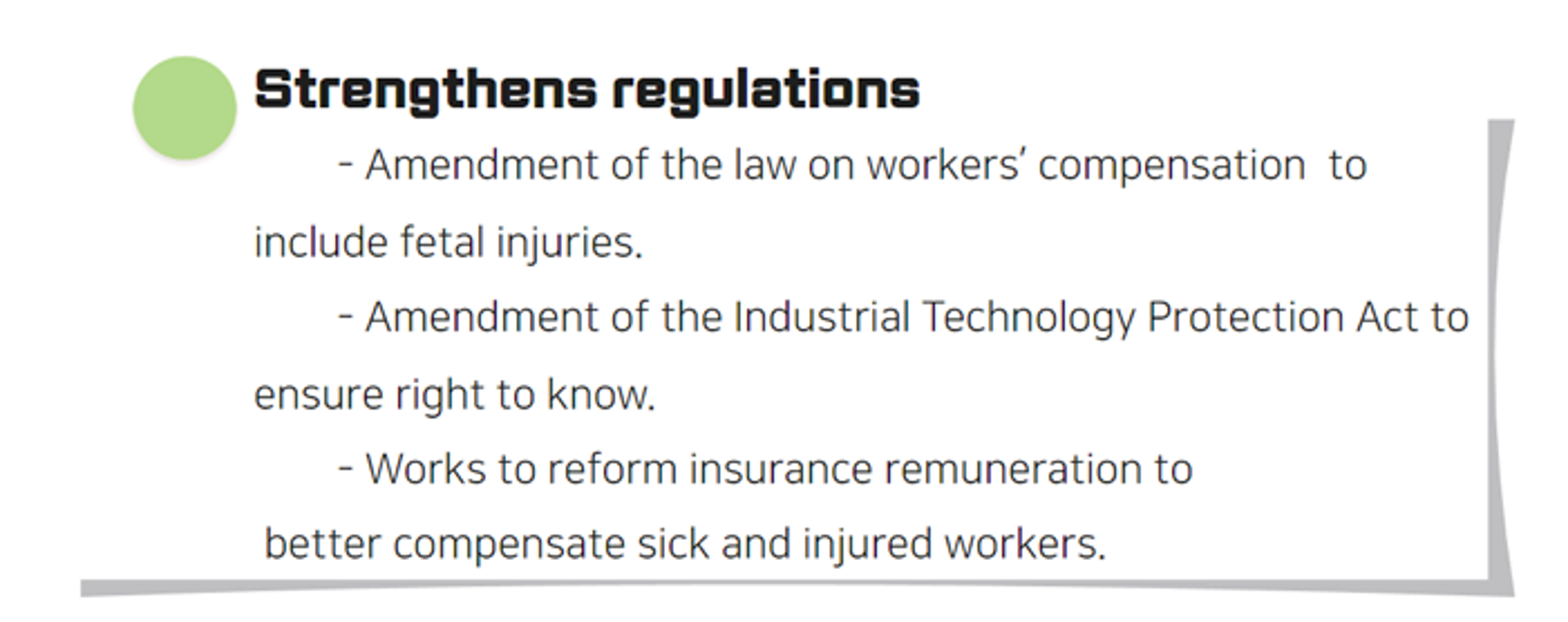
"It is necessary to ease the excessive burden of proof placed on workers, guarantee workers' right to know, and lower the threshold for recognizing industrial accidents," she emphasized.
Nien-Yun Liu, an activist from Taiwan's Association of Victims of Occupational Injuries (TAVOI), introduced cases of RCA factory workers in Taiwan who have been demanding recognition and compensation for decades due to organic solvent exposure and contamination issues.
"Like Samsung's affected workers in South Korea, RCA workers in Taiwan have also suffered from occupational cancers and immune system diseases," she said.
"The success of the semiconductor industry should not be evaluated solely by production speed, output, or market share," she stressed, adding that worker health and rights must also become core criteria for industrial development.
Through the joint declaration, participating organizations demanded relaxation of semiconductor industrial accident recognition standards, strengthened chemical management, and protection of female workers' reproductive health rights.
They also called for responses to environmental issues such as increased water and electricity usage and per- and polyfluoroalkyl substances (PFAS) emissions resulting from the expansion of semiconductor, artificial intelligence (AI), and data center industries.
They demanded enactment of supply chain responsibility legislation to strengthen corporate accountability for labor, human rights, and environmental issues occurring throughout the global semiconductor supply chain.
"The expansion of the semiconductor industry must not occur through the sacrifice of workers' health and lives," they urged, calling on governments and corporations to guarantee worker health and human rights.
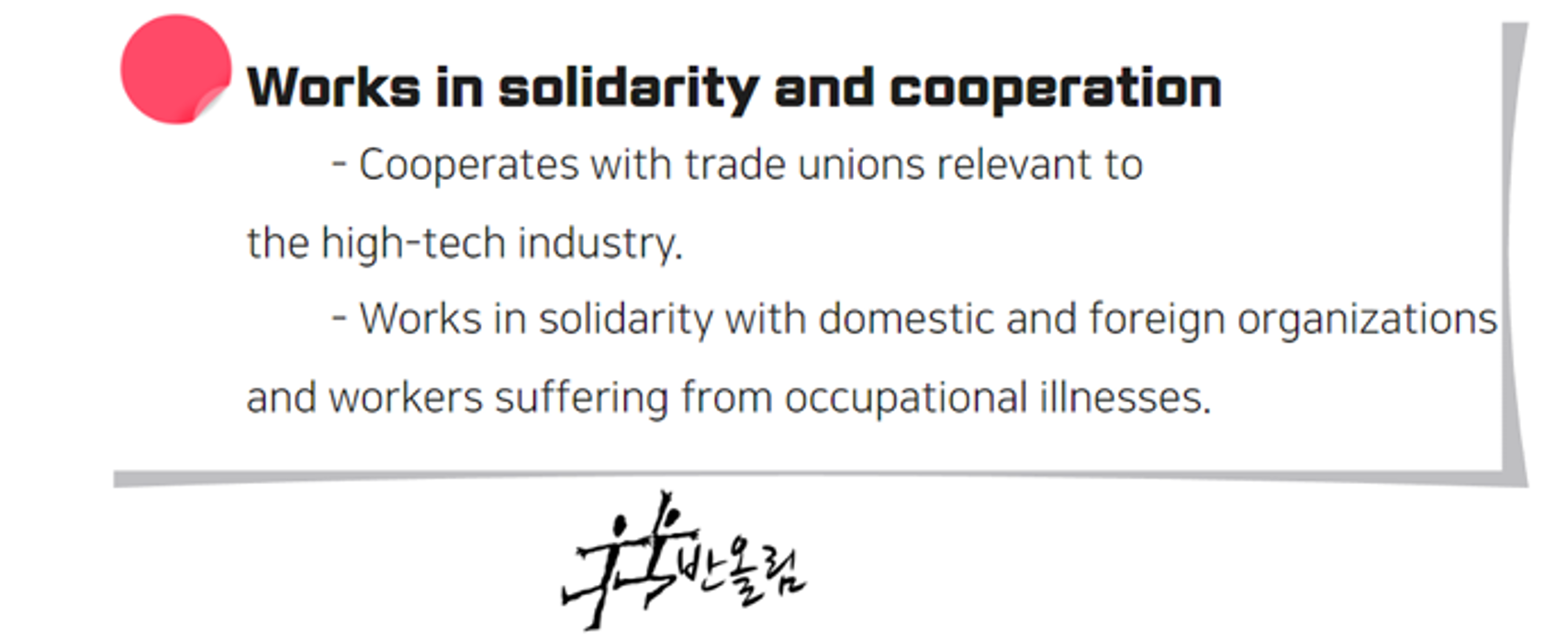
Participating organizations plan to continue sharing occupational disease cases and response experiences from various countries and maintain international solidarity going forward.
ysyoon@yna.co.kr

South Korean, Taiwanese Semiconductor Workers Say 'Worker Health as Important as Corporate Growth' - Yonhap Infomax https://naver.me/GsBhtZul
출처 : Young Sook Yoon
--------------------------------------------------------
South Korean, Taiwanese Semiconductor Workers Say 'Worker Health as Important as Corporate Growth'
International Joint Declaration at Samsung Electronics Hwaseong Site - 25 Organizations Participate
Call for Chemical Information Disclosure, Stronger Supply Chain Accountability
(Seoul=Yonhap Infomax) Young Sook Yoon - South Korean and Taiwanese workers suffering from occupational diseases in the semiconductor and electronics industries have launched an international joint response, calling for expanded recognition of industrial accidents and disclosure of hazardous chemical information.
SHARPS (Supporters for the Health and Rights of People in the Semiconductor Industry) and participating organizations from the International Forum (I-SHARPS) held a press conference on the morning of the 30th in front of Samsung Electronics' Hwaseong H3 facility, announcing an "International Declaration for the Health and Human Rights of Semiconductor Workers."
Twenty-five labor, human rights, and environmental organizations from South Korea, Taiwan, and other countries participated in this declaration. They demanded stronger government and corporate accountability, arguing that worker health and safety have not been adequately protected during the semiconductor industry's growth.
The press conference featured cases of domestic workers who claim to have contracted occupational diseases while working at Samsung Electronics, alongside experiences of workers who suffered occupational diseases at Taiwan's RCA factory.
Lim Da-yoon, a full-time activist at SHARPS, introduced cases of four workers who worked at Samsung Electronics' Giheung and Hwaseong facilities, pointing out that the burden of proving industrial accidents is excessively placed on workers.
Lim shared cases of a worker diagnosed with colon cancer after 19 years at Samsung Electronics' Giheung facility, and workers who died from brain tumors, lung cancer, and leukemia while working at the Hwaseong facility.
"It is necessary to ease the excessive burden of proof placed on workers, guarantee workers' right to know, and lower the threshold for recognizing industrial accidents," she emphasized.
Nien-Yun Liu, an activist from Taiwan's Association of Victims of Occupational Injuries (TAVOI), introduced cases of RCA factory workers in Taiwan who have been demanding recognition and compensation for decades due to organic solvent exposure and contamination issues.
"Like Samsung's affected workers in South Korea, RCA workers in Taiwan have also suffered from occupational cancers and immune system diseases," she said.
"The success of the semiconductor industry should not be evaluated solely by production speed, output, or market share," she stressed, adding that worker health and rights must also become core criteria for industrial development.
Through the joint declaration, participating organizations demanded relaxation of semiconductor industrial accident recognition standards, strengthened chemical management, and protection of female workers' reproductive health rights.
They also called for responses to environmental issues such as increased water and electricity usage and per- and polyfluoroalkyl substances (PFAS) emissions resulting from the expansion of semiconductor, artificial intelligence (AI), and data center industries.
They demanded enactment of supply chain responsibility legislation to strengthen corporate accountability for labor, human rights, and environmental issues occurring throughout the global semiconductor supply chain.
"The expansion of the semiconductor industry must not occur through the sacrifice of workers' health and lives," they urged, calling on governments and corporations to guarantee worker health and human rights.
Participating organizations plan to continue sharing occupational disease cases and response experiences from various countries and maintain international solidarity going forward.
ysyoon@yna.co.kr