-IPEN Regional Coordinator for Southeast and East Asia
The I-SHARPS International Forum on Semiconductor Workers’ Health and Human Rights, held last October 28–30, 2026, in Suwon, Republic of Korea, convened workers, occupational disease victims, trade unions, civil society organizations, environmental advocates, and researchers from South Korea, the Democratic Republic of the Congo, Indonesia, the Philippines, Taiwan, Thailand, and the United States of America.
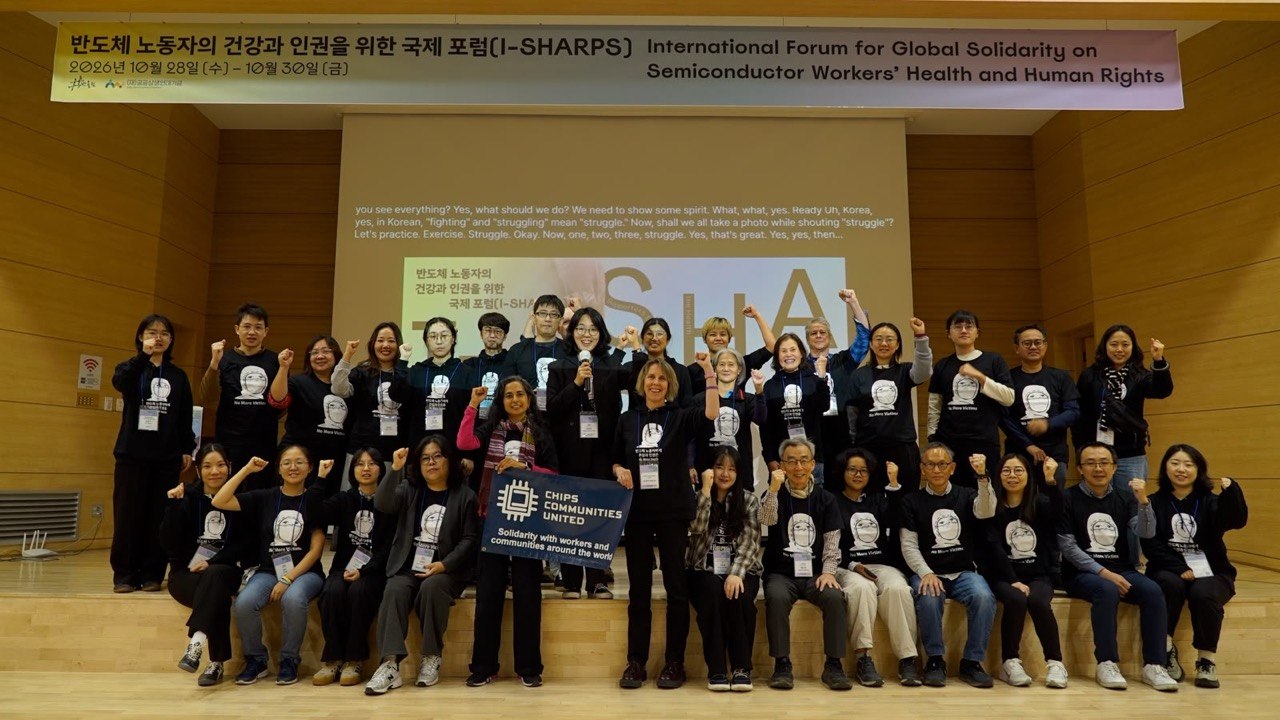
Supporters for the Health and Rights of People in the Semiconductor Industry (SHARPS), an IPEN Participating Organization (PO) based in South Korea, organized the forum. SHARPS has long fought to protect the health and human rights of semiconductor workers. Supported by the Public Workers Solidarity Foundation, the forum aimed to strengthen international solidarity in addressing the health, environmental, and human rights challenges associated with the rapidly expanding semiconductor and electronics industries.
The forum highlighted concerns over hazardous chemical exposure, occupational diseases, environmental pollution, and labor rights violations in semiconductor manufacturing. As artificial intelligence (AI), data centers, and digital technologies drive greater demand for semiconductors, discussions emphasized the electronics industry's broader health and environmental impacts, from resource extraction and chemical-intensive manufacturing to electronic waste. Participants underscored the importance of chemical transparency, workers' right to know, stronger occupational health and safety standards, and corporate accountability across global supply chains.
Chinkie Peliño-Golle of Ecowaste Coalition, IPEN's Regional Hub for Southeast and East Asia, delivered a presentation on the Global Framework on Chemicals (GFC) during Session 3 on Chemical Substances, Environmental Safety, Health, and Regulation, moderated by Dr. Won Kim of the Wonjin Institute for Occupational and Environmental Health (WIOEH). The presentation highlighted the GFC's role in addressing hazardous chemicals throughout their life cycle and translating international commitments into national policies and actions. It emphasized hazardous substances within the life cycle of electrical and electronic products as an internationally recognized Issue of Concern under the GFC, underscoring the need for stronger chemical regulations, information disclosure, safer alternatives, and meaningful civil society participation in advancing chemicals management and protecting workers and communities.
Thitikorn Boontongmai of Ecological Alert and Recovery–Thailand (EARTH Thailand) also presented their organization's work on addressing electronic waste in Thailand during the session on “From Mining to Electronic Waste Seen through Video and Photos.”
A major focus of the forum was also women workers' health, reproductive rights, and intergenerational occupational harm. Discussions highlighted occupational diseases among women semiconductor workers in South Korea, including cases involving Samsung Electronics workers, and the recognition of occupational harm affecting workers' children. Key lessons for Asia included prioritizing prevention, strengthening gender-responsive occupational health research, and improving systems for recognizing and compensating occupational diseases and intergenerational health impacts.
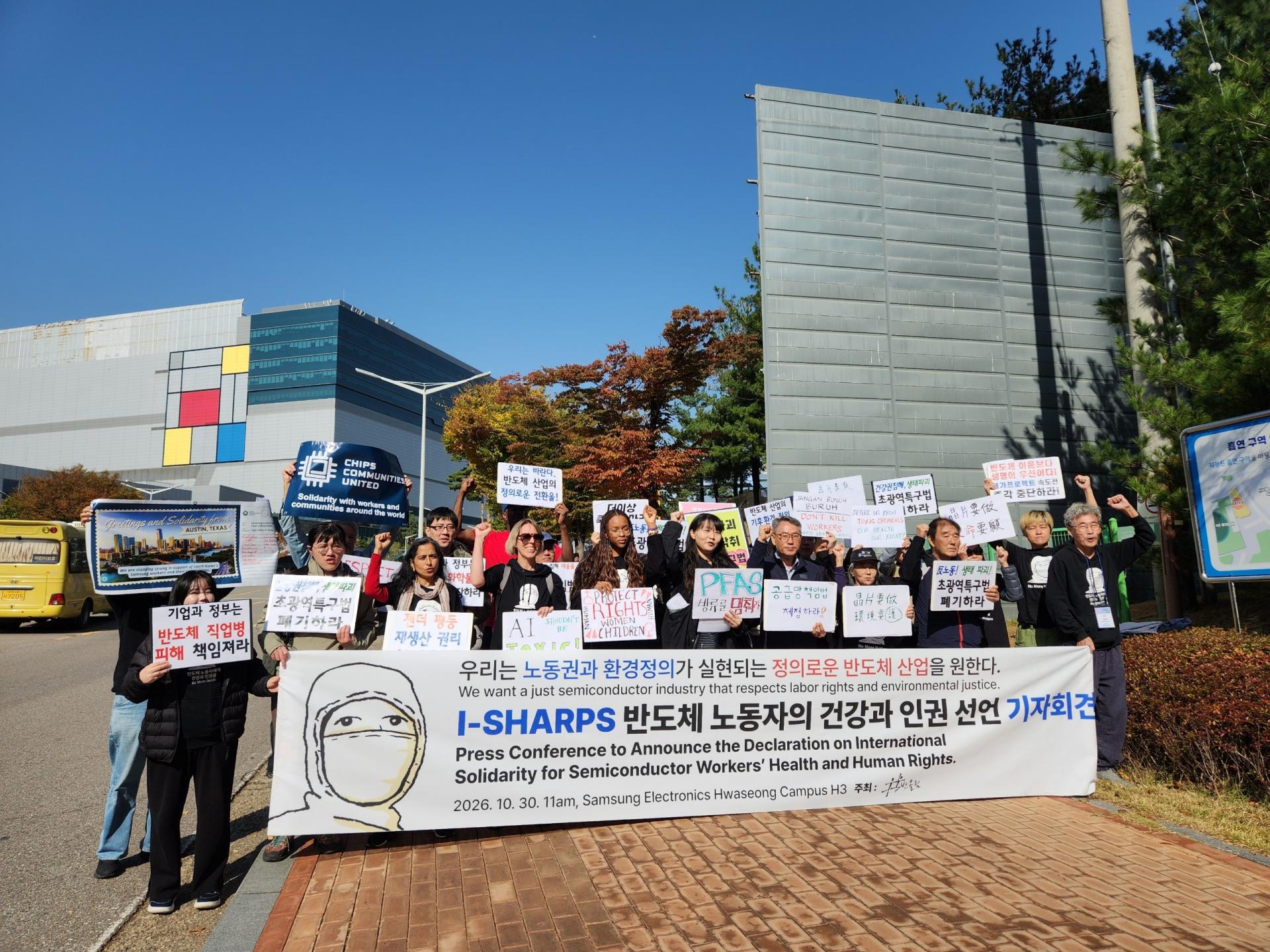
The forum concluded with a press conference in front of Samsung Electronics' Giheung Campus. The joint declaration on semiconductor workers' health and human rights, which reinforced calls for stronger occupational health protections, environmental justice, and corporate accountability, was presented during the press conference. It provided opportunities for continued collaboration among workers, affected communities, researchers, and civil society organizations across countries.
The forum reinforced the importance of connecting global chemicals policy with workers' lived experiences, advancing preventive and gender-responsive approaches, and strengthening international solidarity to ensure that technological progress does not come at the expense of human health, human rights, and the environment.
Check the ISHARPS Forum details here: https://sharps.or.kr/i-sharps
A copy of the International Declaration for the Health and Human Rights of Semiconductor Workers is found HERE.




-IPEN Regional Coordinator for Southeast and East Asia
The I-SHARPS International Forum on Semiconductor Workers’ Health and Human Rights, held last October 28–30, 2026, in Suwon, Republic of Korea, convened workers, occupational disease victims, trade unions, civil society organizations, environmental advocates, and researchers from South Korea, the Democratic Republic of the Congo, Indonesia, the Philippines, Taiwan, Thailand, and the United States of America.
Supporters for the Health and Rights of People in the Semiconductor Industry (SHARPS), an IPEN Participating Organization (PO) based in South Korea, organized the forum. SHARPS has long fought to protect the health and human rights of semiconductor workers. Supported by the Public Workers Solidarity Foundation, the forum aimed to strengthen international solidarity in addressing the health, environmental, and human rights challenges associated with the rapidly expanding semiconductor and electronics industries.
The forum highlighted concerns over hazardous chemical exposure, occupational diseases, environmental pollution, and labor rights violations in semiconductor manufacturing. As artificial intelligence (AI), data centers, and digital technologies drive greater demand for semiconductors, discussions emphasized the electronics industry's broader health and environmental impacts, from resource extraction and chemical-intensive manufacturing to electronic waste. Participants underscored the importance of chemical transparency, workers' right to know, stronger occupational health and safety standards, and corporate accountability across global supply chains.
Chinkie Peliño-Golle of Ecowaste Coalition, IPEN's Regional Hub for Southeast and East Asia, delivered a presentation on the Global Framework on Chemicals (GFC) during Session 3 on Chemical Substances, Environmental Safety, Health, and Regulation, moderated by Dr. Won Kim of the Wonjin Institute for Occupational and Environmental Health (WIOEH). The presentation highlighted the GFC's role in addressing hazardous chemicals throughout their life cycle and translating international commitments into national policies and actions. It emphasized hazardous substances within the life cycle of electrical and electronic products as an internationally recognized Issue of Concern under the GFC, underscoring the need for stronger chemical regulations, information disclosure, safer alternatives, and meaningful civil society participation in advancing chemicals management and protecting workers and communities.
Thitikorn Boontongmai of Ecological Alert and Recovery–Thailand (EARTH Thailand) also presented their organization's work on addressing electronic waste in Thailand during the session on “From Mining to Electronic Waste Seen through Video and Photos.”
A major focus of the forum was also women workers' health, reproductive rights, and intergenerational occupational harm. Discussions highlighted occupational diseases among women semiconductor workers in South Korea, including cases involving Samsung Electronics workers, and the recognition of occupational harm affecting workers' children. Key lessons for Asia included prioritizing prevention, strengthening gender-responsive occupational health research, and improving systems for recognizing and compensating occupational diseases and intergenerational health impacts.
The forum concluded with a press conference in front of Samsung Electronics' Giheung Campus. The joint declaration on semiconductor workers' health and human rights, which reinforced calls for stronger occupational health protections, environmental justice, and corporate accountability, was presented during the press conference. It provided opportunities for continued collaboration among workers, affected communities, researchers, and civil society organizations across countries.
The forum reinforced the importance of connecting global chemicals policy with workers' lived experiences, advancing preventive and gender-responsive approaches, and strengthening international solidarity to ensure that technological progress does not come at the expense of human health, human rights, and the environment.
Check the ISHARPS Forum details here: https://sharps.or.kr/i-sharps
A copy of the International Declaration for the Health and Human Rights of Semiconductor Workers is found HERE.